Guide To Buying Mountain Land In Sequatchie TN
July 2, 2026
July 2, 2026
Wondering if that gorgeous mountain parcel in the Sequatchie area is actually buildable, or just beautiful? You are not alone. Buying land in Marion County can be exciting, especially if you are dreaming about views, privacy, and a custom home, but mountain property comes with a different set of questions than a typical neighborhood lot. This guide will help you focus on the details that matter most so you can make a smart decision with confidence. Let’s dive in.
The Sequatchie area sits in a part of Marion County known for mountains, outdoor scenery, and access to places like Nickajack Lake and the Tennessee River Gorge. Marion County also notes that the area is about 25 miles west of Chattanooga, which adds to its appeal for buyers who want scenic living without feeling too far removed.
That same terrain is a big reason land buying here needs extra care. A parcel may offer amazing views, but slope, drainage, access, and utility planning can all affect whether the land works for your goals and what it may cost to build.
Before you get too attached to a lot, focus on the basics first. In the Sequatchie area, the most important early checks are usually the same ones that drive site planning and permitting.
If those five pieces line up, you are in a much better position to judge whether a property fits your plans. If one of them does not, the land may still work, but you need clear answers before moving forward.
Access is one of the biggest issues with rural and mountain land. Marion County’s building permit guidance says every lot must adjoin or abut a government-maintained road for at least 50 feet.
If the property uses a private road or an access easement, do not treat that as a small detail. It can affect who maintains the road, whether large vehicles can reach the homesite, and how reliable the access is throughout the year.
Marion County’s subdivision regulations say private roads in subdivisions must be built to the same standards as public roads. They are maintained by the owners, and they must remain open to public safety and utility vehicles.
The county also says access easements must connect to a public road, be at least 50 feet wide, and provide year-round access for emergency, public safety, and utility vehicles. That means you want more than a rough path through the woods. You want access that is legal, usable, and dependable.
In Marion County, a mountain road is defined as one with a grade over 9 percent or with unstable landforms. For those roads, the county requires a licensed engineer, a geotechnical investigation, and engineered drawings showing grades, drainage, and materials before road construction can begin or a final plat can be approved.
That matters because steep access can increase costs quickly. A scenic homesite may still be worth it, but you will want to know up front if the driveway or road could require engineered solutions.
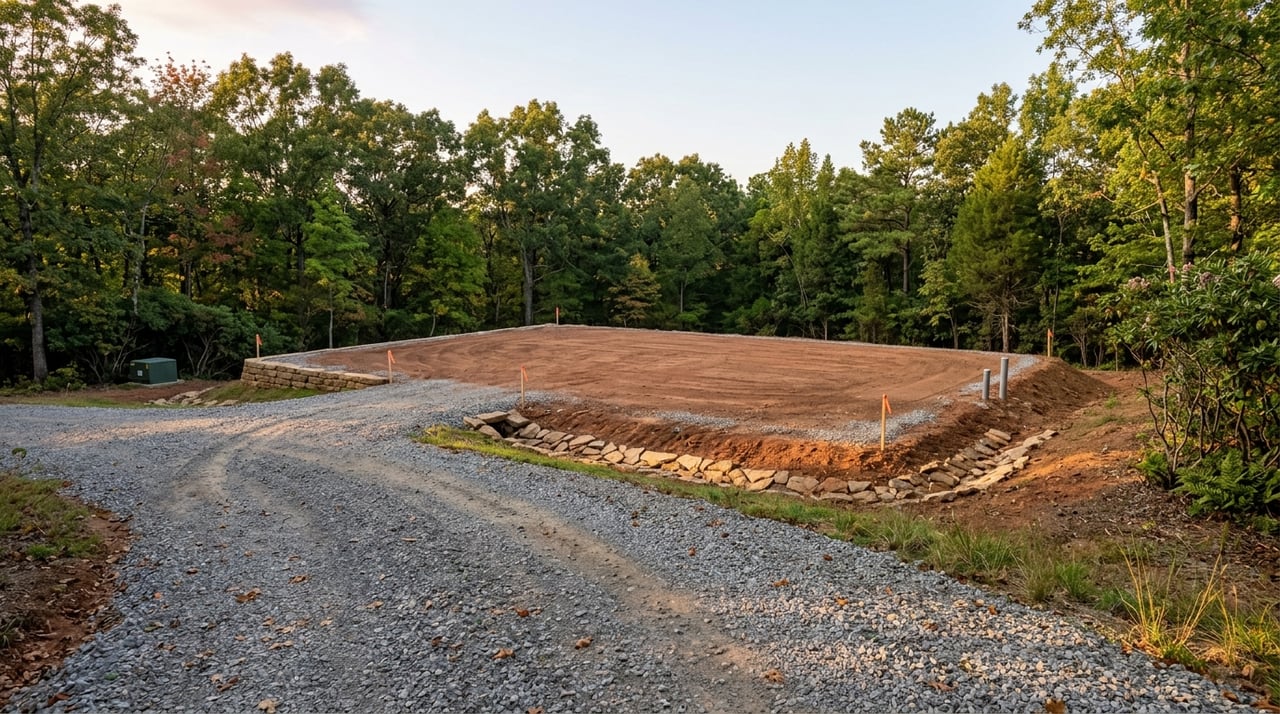
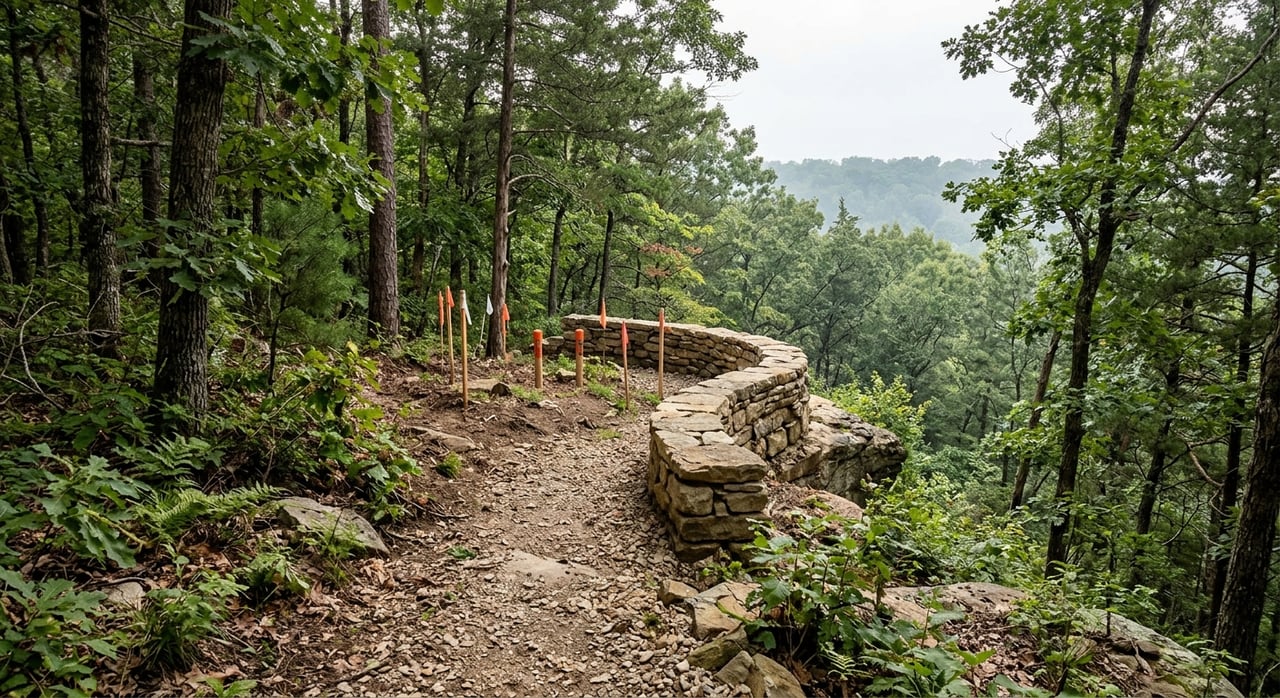
A large acreage number does not always mean a large usable homesite. On mountain land, the practical question is how much of the parcel can support the home, driveway, septic area, and drainage you need.
Steep ground may limit where you can place a home or force more site work than expected. That is why buyers should look past the listing photos and ask where the actual buildable area is located.
Can you build on a steep lot? Maybe. Marion County’s subdivision rules make it clear that steep grades or unstable soils may require engineered solutions for roads, drainage, and construction planning.
That does not mean the lot is a bad choice. It means you should evaluate the real cost and complexity before you buy, not after.
For many mountain and rural parcels, septic and water are make-or-break issues. Marion County’s building packet says septic approval is required before a residential building permit is issued.
Tennessee’s septic program is handled through TDEC, and that is why septic feasibility often starts with a soil professional. If a lot has not been approved, do not assume it will be.
Soils affect septic absorption, foundations, flooding concerns, water tables, and slope limitations. The NRCS says soil surveys can help buyers, builders, and engineers understand those land-use limits before major decisions are made.
For a buyer, that means a soil review can be one of the most helpful early screens, especially if you are comparing multiple wooded or sloped parcels.
Marion County also says that if a lot does not have public water supply, the lot must be at least 25,000 square feet. That rule alone makes water availability an important part of your due diligence.
You will want to confirm whether public water is available at the road, whether a well is the likely path, or whether there is no realistic service plan yet. Nearby homes do not always mean your parcel has the same utility access.
One of the most common misunderstandings in Marion County is the idea that no zoning means no limitations. The county says unincorporated areas have no zoning, but it also makes clear that plats, developments, covenants, restrictions, provisions, and HOAs can still control what can be built.
That is especially important if you are considering a gated community, a scenic development, or a lot that was part of a recorded subdivision. Final plats may show private covenants or deed restrictions, so you should read those carefully before closing.
Restrictions may address home size, building materials, setbacks, road use, or other design standards. Even if your plan seems straightforward, you want to know the rules before you invest in land, house plans, or site work.
This is one of those details that can feel small at first but can shape the whole project later.
Flood risk is not just a valley-floor issue. Marion County’s subdivision rules say land in a floodway cannot be platted for residential occupancy or building sites, and fill cannot be used to raise land in the floodway.
The county also requires floodplain information, FIRM panel numbers, and floodway or 100-year floodplain limits on plats when applicable. Its building guidance says a flood elevation certificate is required if a property is in the floodplain or if the elevation is questionable.
A property can be attractive and still have portions that are not practical for building. Reviewing floodplain information early can help you avoid surprises about where the home, driveway, or septic area can actually go.
When you are buying mountain land in Sequatchie or elsewhere in Marion County, a practical pre-offer package can save you time, money, and stress. Based on county permit and plat requirements, these are the items worth reviewing as early as possible.
This process helps you judge more than just location and view. It helps you understand whether the parcel supports the lifestyle and build plan you have in mind.
Marion County’s planning and building office is the local point of contact for plats, permits, inspections, and floodplain administration. If you are serious about a parcel, confirming the local process before closing is a smart step.
County building guidance also says a 911 address must be on the building site before inspection. That is another reminder that raw land purchases come with a sequence of steps, and getting ahead of them can make your project much smoother.
In the Sequatchie area, the dream is often mountain scenery, privacy, and a peaceful place to build. The best parcels are usually the ones where the view and the practical details work together.
That means confirming access, slope, soils, utilities, and restrictions before you make an offer. When you do that homework early, you can shop with more clarity and move forward with much more confidence.
If you are thinking about buying mountain land in Sequatchie or anywhere in Marion County, having a local guide can make the process feel a lot less overwhelming. Jessica Wright can help you look beyond the view and evaluate the details that matter for your goals.
Stay up to date on the latest real estate trends.
Let me help you explore your wants and dreams, from finding land to building your dream home to finding a house to make your home. I look forward to being part of that adventure with you.
JESSICA WRIGHT
338 S Cedar Ave
South Pittsburg, TN 37380
OFFICE HOURS
Monday to Saturday: 8:00 AM to 8:00 PM