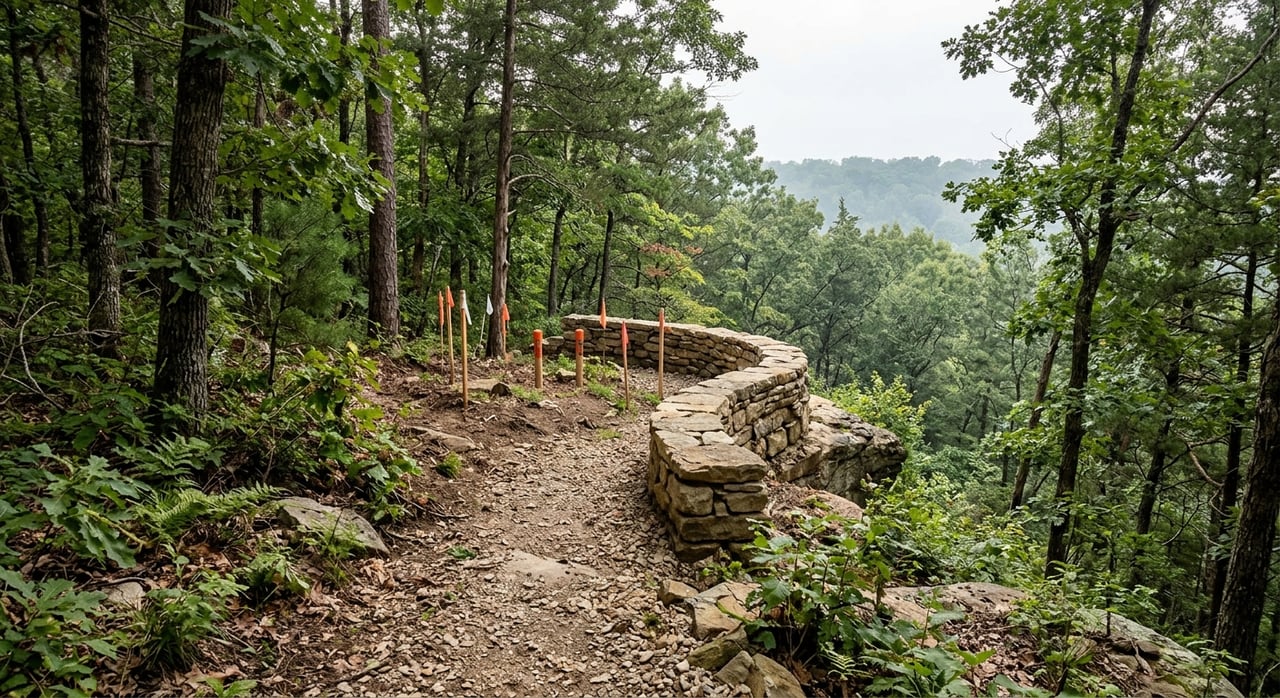
How To Choose A Bluff Lot In Jasper And Marion County
July 16, 2026
July 16, 2026
Are you shopping for a bluff lot because the view stopped you in your tracks? That excitement is real, but in Jasper and Marion County, the best lot is not always the one with the prettiest overlook. If you want to build with confidence, you need to know how slope, access, septic, drainage, utilities, and restrictions affect what you can actually do with the land. Let’s dive in.
A great bluff lot should work as a homesite before you treat it like a view property. In Marion County, subdivision plats are required to show contours, natural drainage, culverts, floodway or 100-year floodplain limits, and features like sinkholes, watercourses, and rock outcroppings. That means the first question is not just what you can see from the lot, but what can realistically fit on it.
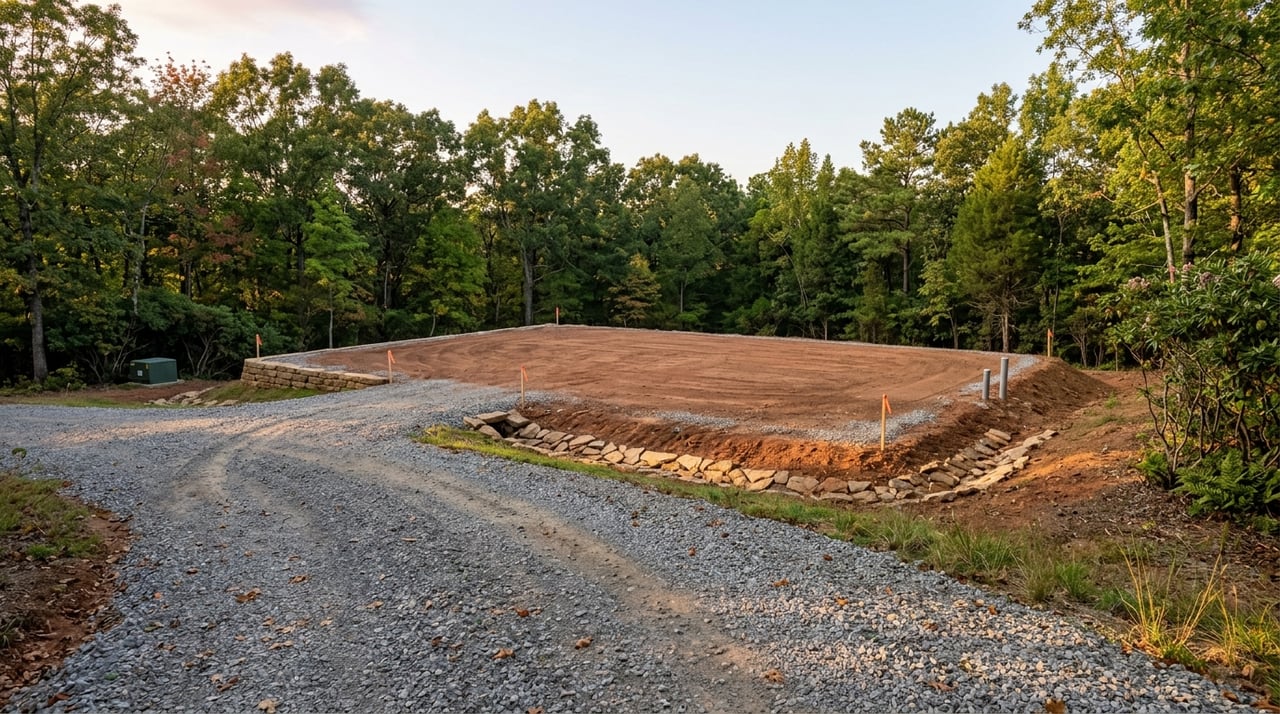
You want to picture the whole site plan early. Think about where the house pad could go, how the driveway would reach it, and whether the land gives you enough room without fighting the terrain. On bluff property, a beautiful outlook can still come with costly challenges if the usable building area is too limited.
Marion County also requires each lot to have a flood-free building site outside easements and setback lines. If a lot sits near the river or another low-lying area, a Flood Elevation Certificate may be needed before a building permit is issued. Tennessee also notes that most homeowners insurance does not cover flood damage, so flood insurance is a separate item to check early.
Bluff and hillside lots can look simple on paper, but slope changes everything. In Marion County, a road is classified as a mountain road if its grade exceeds 9% or if landforms are unstable. Those roads must be designed by a licensed engineer, and geotechnical investigations and soil surveys may be required before road construction or final plat approval.
That matters because road and driveway costs can add up fast. A lot may seem like a great value until you learn what it takes to create safe access. Before you fall in love with a parcel, look closely at how steep the approach is and whether the site appears practical in wet weather and year-round conditions.
Drainage is just as important as slope. The county requires adequate drainage systems, which can include ditches, pipes, culverts, inlets, bridges, and erosion-control features such as headwalls, rip-rap, or concrete apron walls where needed. On bluff land, drainage is not a small detail. It is a major part of long-term stability and maintenance.
A bluff lot needs more than a scenic setting. It also needs dependable access that works for you, your builder, utility providers, and emergency vehicles. Marion County requires each lot to have at least 50 feet of frontage on a governmentally maintained street or approved private road, or approved easement access.
New access easements must be at least 50 feet wide and connect to a public road. Private roads must be built to the same standards as public roads and maintained by the owners. The county also requires year-round access for emergency, public safety, and utility vehicles.
That is especially important when you are looking at a lot with a private road or shared access. Steep or narrow routes may be harder and more expensive to build and maintain over time. You want to confirm not only that access exists on paper, but that it makes sense for real-world use.
Septic approval can make or break a bluff-lot purchase. Marion County says lots served by public water and septic must be at least 15,000 square feet. Lots with private well and septic must be at least 25,000 square feet, and lots with public water plus public sewer must be at least 7,500 square feet.
The county also requires enough land for the original septic system and a duplicate area if needed, plus a 50-foot separation between the septic tank and well. Smaller lots may be considered only with approval from TDEC or the county health authority. That is why septic should never be treated as something to sort out after closing.
TDEC says a septic permit should be obtained before any dirt work or building-pad construction. For alternative septic systems, the state requires an extra-high-intensity soils map prepared by a soils consultant licensed in Tennessee. For subdivision evaluations involving septic, TDEC also requires a survey and soils map before staff can review the parcel split.
If you are choosing between two lots with similar views, the better septic situation may end up being the better investment. A stunning parcel loses some shine if the septic path is uncertain, expensive, or too restrictive for your plans.
Utilities can shape both your budget and your building timeline. Marion County states that if a proposed subdivision is within 1,000 feet of an existing public water or sewer line, those lines are generally required to be extended to serve the lots. The subdivider bears the cost of installing the water or sewer system.
New water-line extensions must also include hydrants spaced no more than 1,000 feet apart. Even if you are not buying in a brand-new subdivision, this tells you something important: utility planning is a serious part of lot development in this area. You want to know early whether public utilities are nearby, already installed, required to be extended, or not available for the lot at all.
It also helps to look at utilities and septic together, not as separate questions. A bluff lot can have a great view and legal access, but still carry extra cost if utility service is limited or if the lot configuration makes installation more complex.
County rules are only part of the picture. Marion County makes clear that subdivision regulations do not override easements, covenants, or other private restrictions. Final plats must show private covenants or deed restrictions, and the owner or developer is responsible for researching and obeying all legal restrictions that control the property.
This is a big deal for bluff and view lots. Private community rules may be stricter than county minimums when it comes to setbacks, architecture, driveway location, utility placement, or further subdivision. In other words, meeting county standards does not automatically mean your building plan will work.
Before making an offer, ask for recorded restrictions and read them carefully. A lot may fit your dream on the surface, but restrictions can affect the size, placement, style, or orientation of the home you want to build.
In unincorporated Marion County, the Building and Planning Office handles permits, subdivisions, and flood administration. The county Assessor of Property can help with GIS mapping and parcel information, and the Register of Deeds keeps deeds and plats. These offices are useful early in the process, especially when you are trying to confirm parcel details before you commit.
If a property is inside Jasper city limits, city functions may apply instead. Jasper separately lists Planning Commission and Water & Sewer functions, so it is smart to confirm whether county rules or city rules govern the lot you are considering. That one step can save you a lot of confusion.
When you are comparing bluff lots in Jasper and Marion County, these are some of the smartest questions to ask:
The goal is not to find a perfect lot on first glance. The goal is to find the lot that gives you the best mix of view, usability, and fewer surprises.
Bluff lots are exciting because they offer the kind of mountain and valley setting many buyers dream about in this part of Tennessee. But they also require careful due diligence. The safest purchase is the one where the view, slope, access, septic, utilities, flood exposure, drainage, and recorded restrictions all check out before closing.
That is where a local, land-savvy guide can make a real difference. When you are buying in Jasper or Marion County, it helps to have someone who understands scenic communities, build potential, and the practical side of mountain property. If you are thinking about buying a bluff lot and want help sorting through your options, reach out to Jessica Wright.
Stay up to date on the latest real estate trends.
Let me help you explore your wants and dreams, from finding land to building your dream home to finding a house to make your home. I look forward to being part of that adventure with you.
JESSICA WRIGHT
338 S Cedar Ave
South Pittsburg, TN 37380
OFFICE HOURS
Monday to Saturday: 8:00 AM to 8:00 PM