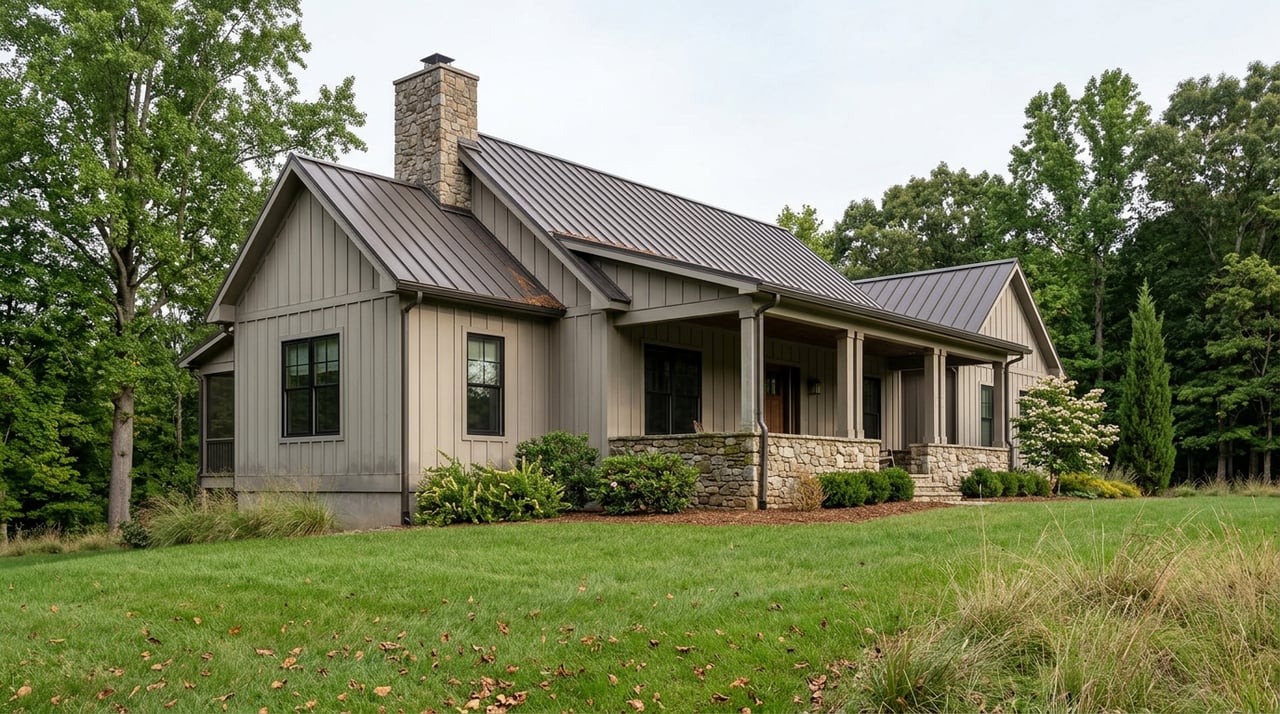
Selling Land in Sequatchie, TN: What to Know About Rollback Taxes
September 17, 2026
September 17, 2026
Say you own sixty acres outside Sequatchie that's been in your family's name for a couple of decades, taxed as agricultural land the whole time. The Tennessee Comptroller's Greenbelt guidance explains why the assessment has stayed low: the county values it at what it produces as a farm, not what it would fetch if someone put twelve lots on it. Then a buyer shows up wanting exactly that: twelve lots, or a custom-home tract, or a gated community entrance sign at the road.
You sign. You close. Months later, a letter arrives from the assessor's office, and it isn't a refund. It's a bill for the taxes you saved while the land carried its farm classification. In Tennessee, the University of Tennessee County Technical Assistance Service explains that the bill often lands on the seller, not the buyer; most people don't find out until it's already in the mail.
Tennessee's Agricultural, Forest and Open Space Land Act of 1976, the law everyone just calls Greenbelt, lets qualifying land get assessed at its use value rather than its fair market value. A hayfield gets taxed like a hayfield, not like twelve future homesites. That's the whole point of the program, and it's a real benefit for anyone holding acreage in the Sequatchie Valley for farming, timber, or open space.
The catch is what happens when that classification ends. Tennessee Code Annotated 67-5-1008 spells out a rollback tax: the difference between what you paid under use value and what you would have paid under market value, clawed back for a set lookback period. For agricultural and forest land, that's the current year plus the two years before it, three years total. For open space land, it's five years.
Here's the part that surprises sellers. Under state law, when a sale causes the land to lose its Greenbelt classification, the seller is liable for that rollback bill unless the purchase contract says otherwise. A buyer's stated plans don't automatically shift the burden.
If a buyer declares in writing at closing an intent to keep the land in Greenbelt, but never actually files the paperwork within 90 days of the sale, the rollback tax becomes the buyer's problem alone. Skip that declaration, and the default liability stays with the seller regardless of what the buyer does with the land afterward.
That's a narrow exception, not a safety net. If your contract is silent and the buyer never puts anything in writing, you're the one the county comes looking for.
There's also a Marion County case behind this framework. In Marion Co. v. State Board of Equalization (Tenn. Ct. App. 1986), the court affirmed that Greenbelt land is assessed on the premise that its current use is its best use, even though that value sits below what the land would command for a more profitable purpose. That's the legal foundation the rollback tax exists to protect: the tax break is meant for people actually farming or holding forest land, not as a discount for land banked ahead of a subdivision.
| Classification | Minimum Size | Rollback Lookback | Who Calculates It | Appeal Deadline |
|---|---|---|---|---|
| Agricultural | 15 acres | Current year + 2 prior (3 years) | County assessor of property | March 1 following notice |
| Forest | 15 acres | Current year + 2 prior (3 years) | County assessor of property | March 1 following notice |
| Open Space | 3 acres | Current year + 4 prior (5 years) | County assessor of property | March 1 following notice |
Rollback liability can only be appealed directly to the State Board of Equalization, and that appeal has to be filed by March 1 of the year after the assessor sends notice. Miss that window and the bill stands.
One detail worth knowing if you're only selling off a piece of a larger holding: the State Board of Equalization's Greenbelt Manual explains that if only part of the parcel is disqualified, rollback is apportioned to that part. If you carve ten acres off a hundred-acre tract for a buyer who's building a house, and the remaining ninety acres still qualify as farm or forest, the rollback bill applies only to the ten acres that came out of the program.
This isn't a hypothetical for Sequatchie. Large, cleared, view-oriented tracts are exactly what's moving through the market right now. One 139-acre parcel recently on the market in Sequatchie was marketed outright as suited for "a sizeable estate, lot subdivision, or residential development," with much of the acreage already cleared for long-range views. That's precisely the kind of property where a change from farm or forest use to residential lots is the whole reason a buyer wants it.
Look at where today's gated communities came from and the pattern holds. Sequatchie Pointe, near South Pittsburg, is now a mix of large homes, tiny homes, RVs, and vacant lots, land that started as something rawer before it became platted homesites. Meanwhile, BattleCreek, still described in listings as a farmland area of the valley, shows the in-between stage: land that's still agricultural today but sits in exactly the kind of setting that draws buyers looking to build.
None of this means Greenbelt land can't or shouldn't sell for development. It means the tax history attached to that land follows it to the closing table, and the contract, not assumptions, decides who pays for it.
If you've searched land prices for Sequatchie and found numbers that seem to contradict each other, there's a reason. Several national land portals blend listing data for Sequatchie, the small Marion County community where Jessica works, with Sequatchie County, an entirely different county to the north with Dunlap as its seat. The two share a name and a valley, but they're not the same tax jurisdiction, the same assessor's office, or the same market. A per-acre figure pulled from a page labeled "Sequatchie County" may be describing land forty minutes away under a different set of local rules. When you're trying to price a Greenbelt-classified tract or estimate a rollback exposure, that mix-up matters more than it looks like it should.
If you're sitting on acreage near Sequatchie that's carried an agricultural, forest, or open space classification, a few steps before you sign anything can save a surprise later:
Does the rollback tax show up on the closing statement automatically? Not necessarily. The assessor calculates and bills it separately, often after closing, once the change in use is confirmed. That's exactly why it needs to be addressed in the contract ahead of time rather than assumed away.
What if the buyer says they'll keep farming the land? The written declaration described above matters: if the buyer makes that declaration at closing but does not file the paperwork within 90 days, the rollback tax becomes the buyer's responsibility. A verbal plan or a handshake doesn't change who the county holds responsible.
Can I appeal if I think the rollback amount is wrong? Liability for the rollback tax can be appealed to the State Board of Equalization, but the window is tight: by March 1 of the year after the assessor's notice. The underlying property values used in that calculation follow a separate appeal process.
Greenbelt land near Sequatchie is some of the most sought-after acreage in Marion County precisely because it's still large, still open, and still priced closer to its farm value than its build-out potential. That's an advantage for sellers, right up until the moment the sale itself changes what the county considers the land to be. Knowing which side of that line your contract puts you on is worth sorting out before you sign, not after the letter arrives.
If you're weighing a sale of Greenbelt-classified acreage in Sequatchie or anywhere else in Marion County, Jessica Wright can walk through what your specific parcel's history means for a listing strategy and a contract that puts the rollback question in writing instead of leaving it to chance. Let's Connect.
This article is general information, not legal, tax or financial advice. Consult a qualified professional about your situation.
Stay up to date on the latest real estate trends.
Let me help you explore your wants and dreams, from finding land to building your dream home to finding a house to make your home. I look forward to being part of that adventure with you.
JESSICA WRIGHT
338 S Cedar Ave
South Pittsburg, TN 37380
OFFICE HOURS
Monday to Saturday: 8:00 AM to 8:00 PM