The Permit Stack Decides What Your Acre Can Actually Become in Sequatchie, TN
September 10, 2026
September 10, 2026
A 139-acre tract on Lick Point Road in Sequatchie is listed at $1,175,000. A few miles away, 65 acres on the bluff above Fiery Gizzard Canyon runs $1,675,000. Both sit in the same small Marion County community, both promise long-range views and privacy, and both are marketed the way most acreage gets marketed: acres, price, a line about the view.
What neither listing tells you is which permits your specific acre will trigger before you can pour a foundation, and that gap is where a lot of Sequatchie land deals either sail through or stall out. Price per acre answers what you're paying. It says nothing about what you're clearing to get there.
Land search data for the Sequatchie area shows just how wide that per-acre number swings depending on the sample and the moment you catch it. As of mid-August 2026, one listing aggregator's active-listing pool for the Sequatchie area put the average closer to $29,825 an acre. Marion County's rural land overall, measured the previous November, averaged closer to $15,224 an acre. Neither number is wrong. They're measuring different mixes of parcels at different points in the year, and the mix is exactly the problem: a flat, utility-ready lot and an off-grid bluff tract can carry wildly different price tags per acre while requiring almost identical permitting effort, or the reverse.
If you're comparing two tracts by price per acre alone, you're comparing the wrong column. The column that actually predicts your timeline and your build budget is the permit stack sitting underneath the listing description.
Every buildable acre in unincorporated Marion County, which covers Sequatchie, has to clear roughly the same sequence before construction starts. The order matters, because each step gates the next one.
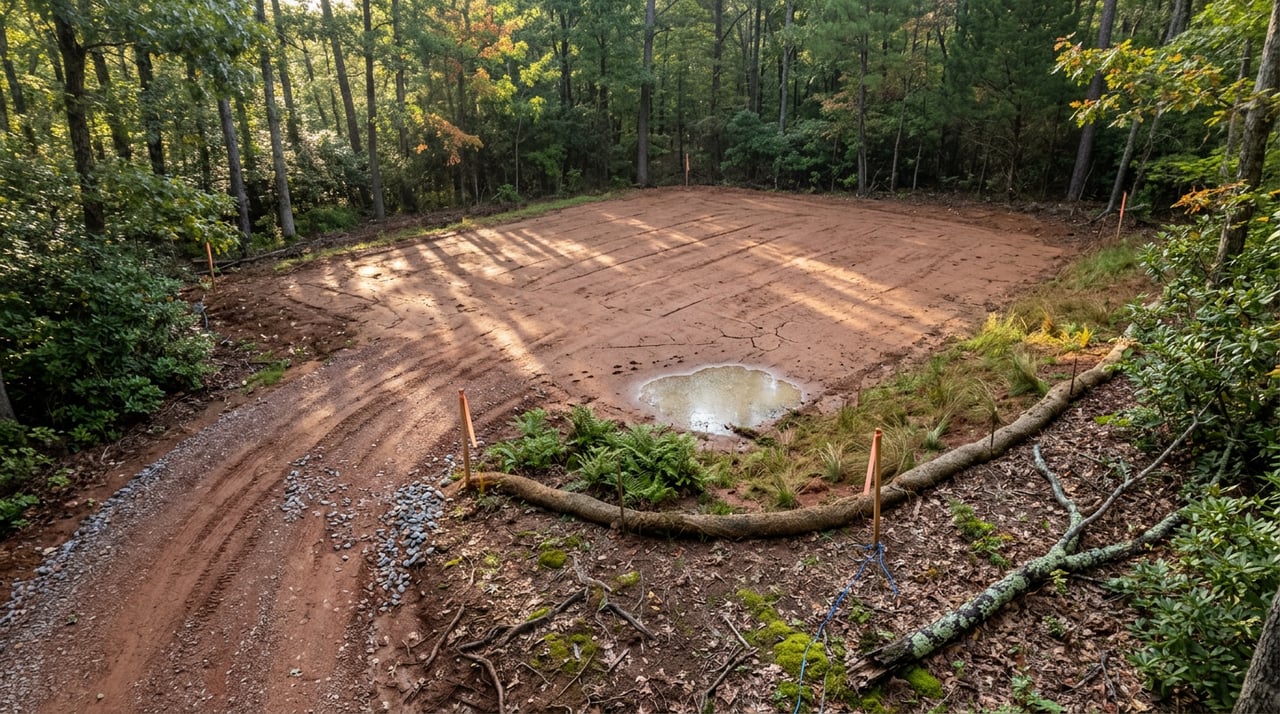
First, the soil or perc test. Marion County requires this to be performed by a certified engineer rather than any approved soil consultant, which is a narrower pool than some buyers expect coming from other Tennessee counties. The state's own soil evaluation rules also flag one hard limit worth knowing before you fall in love with a bluff lot: slopes exceeding 50 percent are automatically considered unsuitable for a standard drainfield, no matter how good the soil underneath.
Second, the septic permit itself. Once the soil test clears, you take it to the Marion County Department of Environmental Health. A new-system permit runs $200, and the county requires any installer to hold current CIOWTS certification (Certified Installer of Wastewater Treatment Systems) before they can legally put a tank and field in the ground.
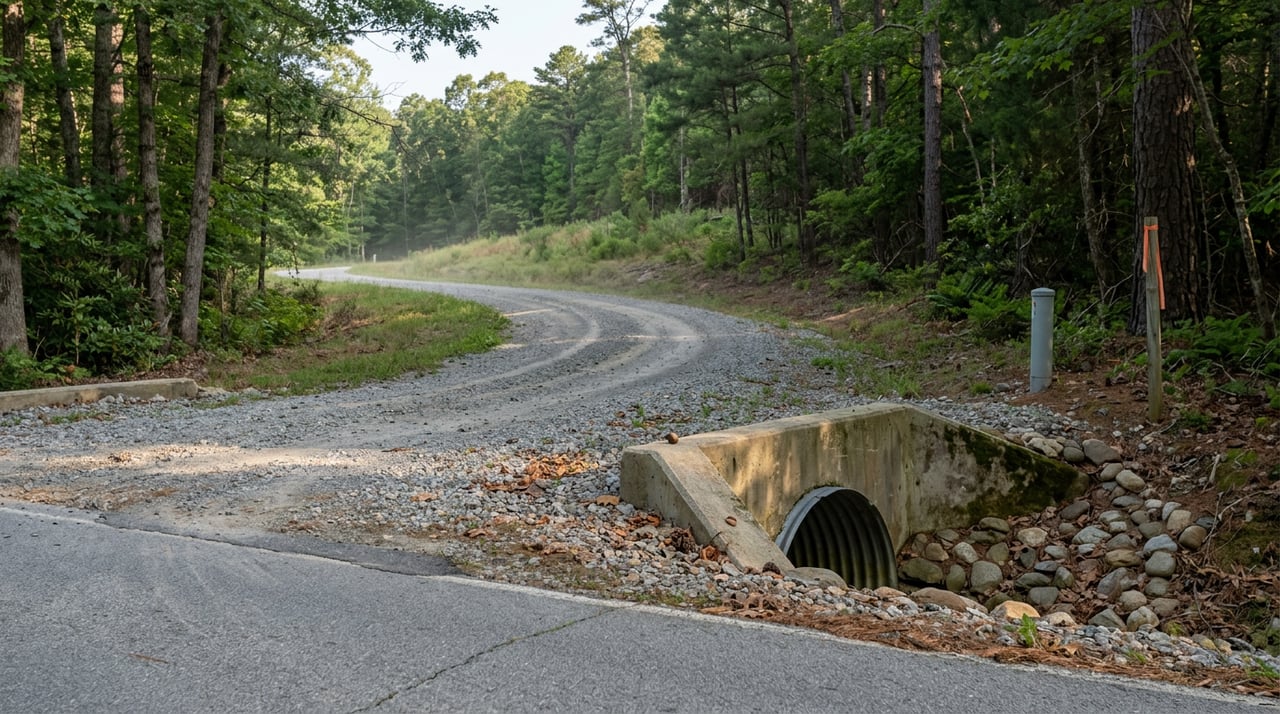
Third, the driveway or highway entrance permit. If your access road connects to a state highway, that permit runs through TDOT's district office covering Marion County, not the county building department. TDOT's own manual sets sight-distance minimums, grading rules, and culvert requirements, and none of it is waivable just because the road looks quiet. If your access road is a county-maintained road instead, that authority shifts to Marion County. If it's a genuinely private road shared with a neighbor, no government permit applies at all, but Tennessee law still expects a written road maintenance agreement covering cost-sharing, drainage, and gate access, since courts generally hold that the party benefiting from the easement bears the cost of keeping it usable.
Fourth, the building permit, issued through Marion County's own building and planning office. The county's current building official is Gabe Yeargan, and permits for unincorporated Marion County are filed through the county's online system rather than a state portal.
Here's the fee and authority breakdown in one place:
| Permit | Who Issues It | What Triggers It |
|---|---|---|
| Perc/soil test | Certified engineer, filed with county Environmental Health | Any new septic system |
| Septic permit | Marion County Dept. of Environmental Health | $200 new system, valid one year, CIOWTS-certified installer required |
| Driveway/entrance permit | TDOT (state highway) or Marion County (county road) | Depends entirely on which road your frontage sits on |
| Building permit | Marion County Building & Planning (Gabe Yeargan) | Any new structure in unincorporated county |
Stack all four on a single parcel and you can see why "buildable" is doing a lot of work in a listing description.
The Lick Point Road property is a useful example precisely because the listing calls out something most buyers would miss: the road splits the 139 acres in half, and both halves already have county water, electricity, and fiber optic access at the road. That single detail removes a huge chunk of permitting uncertainty before you even schedule a soil test. It's also less than five minutes from Foster Falls, the 60-foot waterfall inside the 12,166-acre South Cumberland State Park, and an easy drive from the growing Jasper Highlands community, which is part of why it's priced where it is.
The bluff tract above Fiery Gizzard Canyon tells a different story. Sitting directly on a bluff edge next to Fiery Gizzard State Park is a real selling point for the view, but bluff terrain is exactly where that 50 percent slope threshold starts to matter. A buyer here needs the soil engineer's report before making assumptions about where, or whether, a conventional drainfield fits.
Then there's the 158-acre tract with frontage on the Little Sequatchie River, marketed explicitly as off-grid. Off-grid is honest marketing, but it also means no well permit has been pulled yet, no electric service exists at the road, and the buyer is starting the utility conversation from zero rather than picking up where a previous owner left off. Riverfront acreage like this also tends to need extra care in siting the drainfield relative to the water, which is exactly what the soil engineer's evaluation is for.
Compare all three and the pattern holds: identical community, wildly different permit paths, and none of that difference shows up in the acres-and-price header of the listing.
Here's the detail that catches out-of-state buyers the most. Tennessee's general guidance describes a septic construction permit as valid for three years after issuance, which is the number most buyers find when they search the state process. Marion County's own paperwork sets that window at one year. If you pull your soil test and permit early in a due diligence period, then spend several months finalizing financing, working with a builder, or waiting out a slow season, you can watch that county permit lapse before you ever break ground, forcing a second round of fees and inspection before construction can start.
That mismatch is not a scandal. It's just a local rule that doesn't match the general expectation, and it's exactly the kind of gap that turns a smooth close into a frustrating one. If you're under contract on land in Sequatchie and planning to build later rather than immediately, ask when the septic permit clock actually starts and build your construction timeline around Marion County's one-year window, not the state's three-year one.
None of this means acreage in Sequatchie is harder to buy than anywhere else in Marion County. It means the order of operations matters more than the price tag. Before you write an offer on raw land here, ask the seller or listing agent three things: has a soil or perc test already been run, and by whom, is the access road state-maintained, county-maintained, or private, and what utilities, if any, sit at the property line already. A tract like the Lick Point Road parcel, where utilities already reach both halves of the split lot, hands you a real head start that a comparably priced off-grid tract simply doesn't offer, even if the acreage and view are similar.
Buying land here is still one of the more rewarding moves in this part of Tennessee. Foster Falls, Fiery Gizzard, and the long views toward Jasper Highlands aren't going anywhere. Getting the permit sequence right just means you get to actually build on it, on the timeline you planned for.
Does an existing soil or perc test transfer if I buy the land from someone else? Often yes, if the test is recent and the county still has it on file, but confirm directly with Marion County Environmental Health rather than assuming, since the one-year permit clock still applies from the original issue date.
What if my driveway crosses both a state highway and then continues on private gravel? You'll likely need the TDOT entrance permit for the highway connection and a separate written road maintenance agreement for the private portion, since Tennessee treats those as two distinct legal questions.
Do I need a driveway permit for a small cabin or hunting camp? Any new or modified entrance onto a state highway needs a TDOT permit regardless of the size of the structure it serves. County road connections should be confirmed with Marion County directly, since requirements can differ from the state highway process.
If you're weighing a tract in Sequatchie against something in Whitwell, Jasper, or elsewhere in Marion County, I'd rather walk the permitting picture with you before you write an offer than have you learn it from a stalled closing. Jessica Wright has spent years helping buyers sort exactly this kind of land question out before it becomes a problem. Let's Connect.
Stay up to date on the latest real estate trends.
Let me help you explore your wants and dreams, from finding land to building your dream home to finding a house to make your home. I look forward to being part of that adventure with you.
JESSICA WRIGHT
338 S Cedar Ave
South Pittsburg, TN 37380
OFFICE HOURS
Monday to Saturday: 8:00 AM to 8:00 PM